Chiropractic Has Never Had a Content Problem
Google Is Learning to See Websites—And That Changes Everything for Chiropractic
A new Search Engine Land article by Koray Tuğberk Gübür makes an important argument:
Google is no longer evaluating a website based only on the words written on the page.
It is increasingly attempting to understand what the pageis, what itdoes, how the information is organized, and whether the visitor can actually use it to complete a meaningful task.
Gübür calls thisvisual semantics.
In plain English:
Google may be learning to see the difference between a page that talks about something and a page that actually does something useful.
That distinction is incredibly important for the future of ChiropracticResults.
Chiropractic Has Never Had a Content Problem
Search Google for almost any chiropractic condition and you will find thousands of articles.
“Can chiropractic help headaches?”
“Chiropractic for lower-back pain.”
“Benefits of chiropractic care.”
Most of these pages contain similar information, similar language, and similar claims.
The problem is not that the internet needs another article saying chiropractors help people.
The problem is that patients still have very few ways to answer the questions that matter most:
- Has this chiropractor helped someone with a problem like mine?
- What actually improved?
- How long did it take?
- How many similar results has the clinic documented?
- Is the clinic’s specialty supported by evidence or merely claimed?
- How does one provider compare with another?
That is the gap ChiropracticResults was created to fill.
From Chiropractic Content to Chiropractic Evidence
Traditional chiropractic websites are largely built around claims.
A clinic may say it treats:
- Headaches
- Neck pain
- Sciatica
- Sports injuries
- Pediatric patients
- Pregnancy-related discomfort
But listing a condition does not prove experience with that condition.
Calling yourself a specialist does not establish specialization.
And a five-star review saying, “The staff was amazing,” does not tell a prospective patient whether anyone with chronic migraines, numbness, limited mobility, or severe lower-back pain actually improved.
ChiropracticResults is designed to organize a different kind of information:
Documented patient outcomes.
Not simply what a clinic offers.
What patients reported experiencing before care, what changed, how much it changed, and the approximate timeline involved.
That distinction matters to patients, but the Search Engine Land article suggests that it may increasingly matter to search engines and AI systems as well.
Modern search engines are attempting to understand webpage layout, hierarchy, structured information cards, tables, comparison tools, filters, and interactive components—not only paragraphs of text.
That means a structured outcome should not be treated as another paragraph on another clinic profile.
It should be presented as a recognizable evidence object.
What a Search Engine Should See
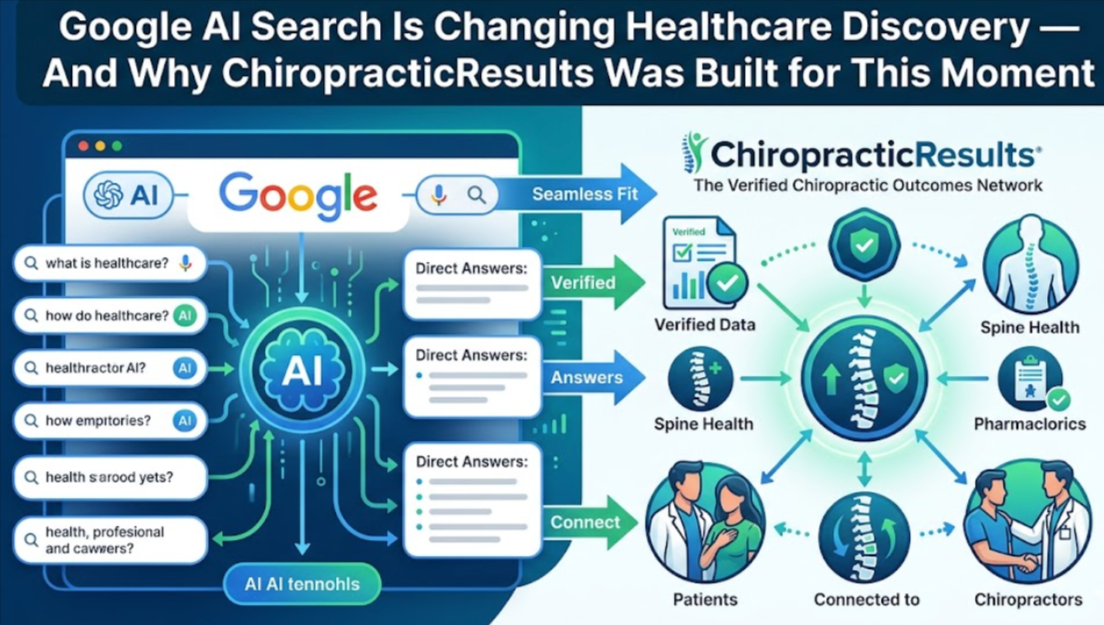
When Google, ChatGPT, Gemini, or another AI system encounters a ChiropracticResults clinic profile, we do not want it to interpret the page as:
Another local chiropractic listing.
We want it to understand:
This is a structured record of conditions, providers, patient starting points, reported improvements, timelines, verification status, and geographic relevance.
That requires more than SEO copy.
It requires intentional structure.
A documented outcome should clearly communicate:
- The primary problem
- The patient’s starting point
- The improvement or result
- The timeline
- The provider
- The location
- The relevant condition classification
- The verification or attestation process
- The date the information was added or updated
The presentation of those elements helps humans understand the result quickly.
It may also help machines understand what type of information they are evaluating and how each piece relates to the others.
Gübür argues that search systems increasingly classify pages through their functional components and layouts. A comparison platform should look and function like a comparison platform. A calculator should make the calculator central. A directory should help users evaluate and contact providers. A useful page should enable the task the searcher came to complete.
That is the opportunity in front of ChiropracticResults.
A Directory Is Not Enough
There are already plenty of online healthcare directories.
Most contain some combination of:
- Provider name
- Photograph
- Address
- Biography
- Services
- Star ratings
- Reviews
- Contact information
ChiropracticResults cannot win by becoming another directory with a different logo.
Our opportunity is to become something fundamentally more useful:
A chiropractic outcomes and decision platform.
A patient looking for a chiropractor should be able to:
- Search for their specific problem
- Find providers with relevant documented outcomes
- Compare the quantity and relevance of those outcomes
- Review individual patient-result stories
- Understand how recently results were documented
- See how the clinic defines and verifies an outcome
- Make a more informed decision about whom to contact
That is not passive content.
That is functionality.
And according to the visual-semantics argument, functionality may become an increasingly important part of how search systems distinguish truly useful resources from pages created primarily to capture search traffic.
Why This Matters for “Best Chiropractor” Searches
Consider a search such as:
Best chiropractor for headaches in Gilbert, Arizona.
The typical search result presents an opinionated list.
Someone writes five clinic descriptions, summarizes public reviews, adds an affiliate or lead-generation link, and calls the article a ranking.
ChiropracticResults has the opportunity to create a different kind of answer.
Instead of saying:
These are the five best chiropractors.
We can show:
- Which clinics have documented headache outcomes
- How many relevant outcomes each clinic has
- The types of headaches represented
- How recently those outcomes were added
- Whether the clinic participates in Results Assurance
- The completeness of each provider’s outcome data
- The methodology used to organize or rank the providers
The difference is simple:
Most ranking pages make a claim.
ChiropracticResults canshow its work.
That makes the page more valuable to the patient and more understandable to the systems evaluating it.
The Warning for Programmatic SEO
There is also a warning in the Search Engine Land article.
Technology makes it incredibly easy to generate thousands—or millions—of pages.
A platform could create a separate page for every:
- City
- ZIP code
- Condition
- Provider
- Technique
- Symptom
- Combination of those variables
But producing more URLs does not automatically create more authority.
Gübür argues that search engines are becoming increasingly selective about pages that appear scalable but offer limited human effort, limited functionality, or little unique value. He contrasts websites that merely scale text with websites that scale systems, structured components, tools, and useful interactions.
For ChiropracticResults, the lesson is clear:
We should not generate a page simply because a keyword combination exists.
A page should exist because ChiropracticResults possesses enough meaningful information to provide a useful answer.
A “best chiropractor for migraines in Indianapolis” page should not be published because software can produce it.
It should be published when the platform has sufficient local providers, relevant outcomes, transparent methodology, meaningful comparisons, and a real next step for the patient.
We should scale the evidence—not the bullshit.
The Future of Topical Authority
For years, topical authority has been treated primarily as a content-volume strategy:
Write a main article.
Write supporting articles.
Link them together.
Mention every related entity and question.
That may still matter, but it is no longer enough.
A platform demonstrates authority not only through how much it says, but through how effectively it organizes information and helps people use it.
ChiropracticResults can establish topical authority around chiropractic outcomes by creating living evidence hubs for conditions such as:
- Headaches
- Lower-back pain
- Neck pain
- Sciatica
- Neuropathy
- Pregnancy-related pain
- Pediatric concerns
- Sports injuries
- Balance and mobility problems
Each condition page can bring together:
- Documented outcomes
- Providers
- Cities
- Outcome timelines
- Common starting complaints
- Reported improvement ranges
- Relevant techniques
- Patient questions
- Methodology and limitations
That is not merely an article about headaches.
It is an organized body of evidence around chiropractic headache outcomes.
What ChiropracticResults Is Really Building
ChiropracticResults is not attempting to prove that every chiropractor gets the same result.
It is not attempting to replace medical research.
It is not claiming that individual patient outcomes guarantee future results.
It is building the missing evidence layer between a clinic’s marketing claims and a prospective patient’s decision.
The internet already has:
- Reviews
- Directories
- Provider biographies
- Health articles
- Social-media testimonials
What it has lacked is a structured way to organize and explore chiropractic outcomes at the provider, condition, and local-market level.
That is the category ChiropracticResults intends to own.
The Strategic Opportunity
If visual semantics becomes as important as Gübür argues, the winners will not necessarily be the websites that publish the most words.
They will be the websites that make their purpose unmistakable.
For ChiropracticResults, that means every important page should visually and functionally answer:
- What problem is this page helping the visitor solve?
- What evidence is available?
- How is that evidence organized?
- What makes this information different from an ordinary directory?
- What can the visitor compare, filter, explore, or verify?
- What action can the visitor take next?
Our competitive advantage will not come from writing more generic chiropractic content.
It will come from building the clearest, deepest, most useful representation of chiropractic outcomes available anywhere online.
The future of search may not simply reward the website that says the right thing.
It may reward the website that can most clearly demonstrate what it knows, how it knows it, and what the visitor can do with that information.
That is exactly what ChiropracticResults was built to become.