Spinal Decompression and Disc Care in Dickson
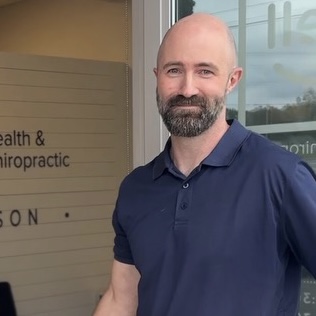
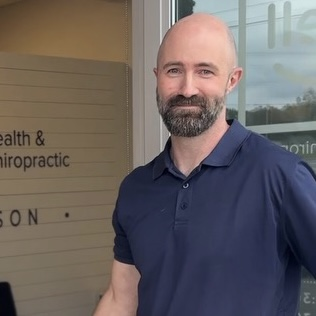
Dr. Adam Meade
Chiropractor at Well Health Centers - Dickson
Disc-related pain is one of the most common presentations we see at Well Health Centers - Dickson. Patients describe a familiar arc: an aching low back that turns into a sharp line down the leg, or neck stiffness that starts referring into the shoulder blade and arm. The underlying mechanics are usually the same — a disc that has lost height, a nerve root that is being crowded, and paraspinal muscles that have locked down to protect the segment.
Why decompression works when rest does not
Bed rest and anti-inflammatories can quiet symptoms, but they don't change the geometry around the disc. Non-surgical spinal decompression uses controlled, cyclic traction to create negative pressure inside the disc space. That pressure differential is what allows fluid, oxygen and nutrients to move back into the disc, and it's what gives an irritated nerve root a little more room to breathe.
Paired with Cox Flexion-Distraction — a hands-on technique that opens the posterior disc space segment by segment — decompression sessions in Dickson tend to produce measurable change inside the first two to three weeks: less radiating pain, longer sitting tolerance, and a noticeable drop in morning stiffness.
Structural correction is the second half of the equation
Decompression addresses the disc. Structural and corrective care addresses the reason the disc was under load in the first place. A forward head posture, a rotated pelvis, or a lumbar curve that has flattened over years of sitting all change how force travels through the spine. If those inputs don't change, the disc stays vulnerable.
At Well Health Centers, decompression cases are typically layered with postural correction and rehab, IASTM for the surrounding soft tissue, and — where indicated — shock wave therapy to accelerate healing in chronic tendon and ligament involvement. The goal is not just to get a patient out of pain, but to leave the disc in a mechanical environment where it can stay decompressed.
What patients tend to notice first
The earliest changes are usually functional rather than dramatic: sleeping through the night without repositioning, standing up from a chair without bracing, driving to Nashville without needing to stop. Pain scores drop in parallel, but it's the return of ordinary movement that patients mention first — and it's the marker we track most closely in Dickson.