Stress, Trauma and Spinal Blockages: Releasing the Body's Hidden Tension

Naomi van Veen
Owner & Chiropractor at TOPCHIRO Amsterdam
Patients often arrive at TOPCHIRO Amsterdam expecting us to focus only on their back or neck. But within a few visits, a more complete picture emerges: the body is holding stress and old trauma as physical tension, and the spine is one of the clearest places it shows up.
How stress becomes a spinal pattern
Under chronic stress, the nervous system stays in a low-grade fight-or-flight state. Over time this leads to:
- Sustained muscle tightness around the spine
- Reduced mobility in specific segments ("blockages")
- Shallow, upper-chest breathing
- Headaches and jaw tension
- Poor sleep and a restless body even at rest
Old physical or emotional traumas — falls, accidents, prolonged stress periods — often anchor themselves in the same way.
Our approach
- Listen first. Patient history matters as much as the physical exam.
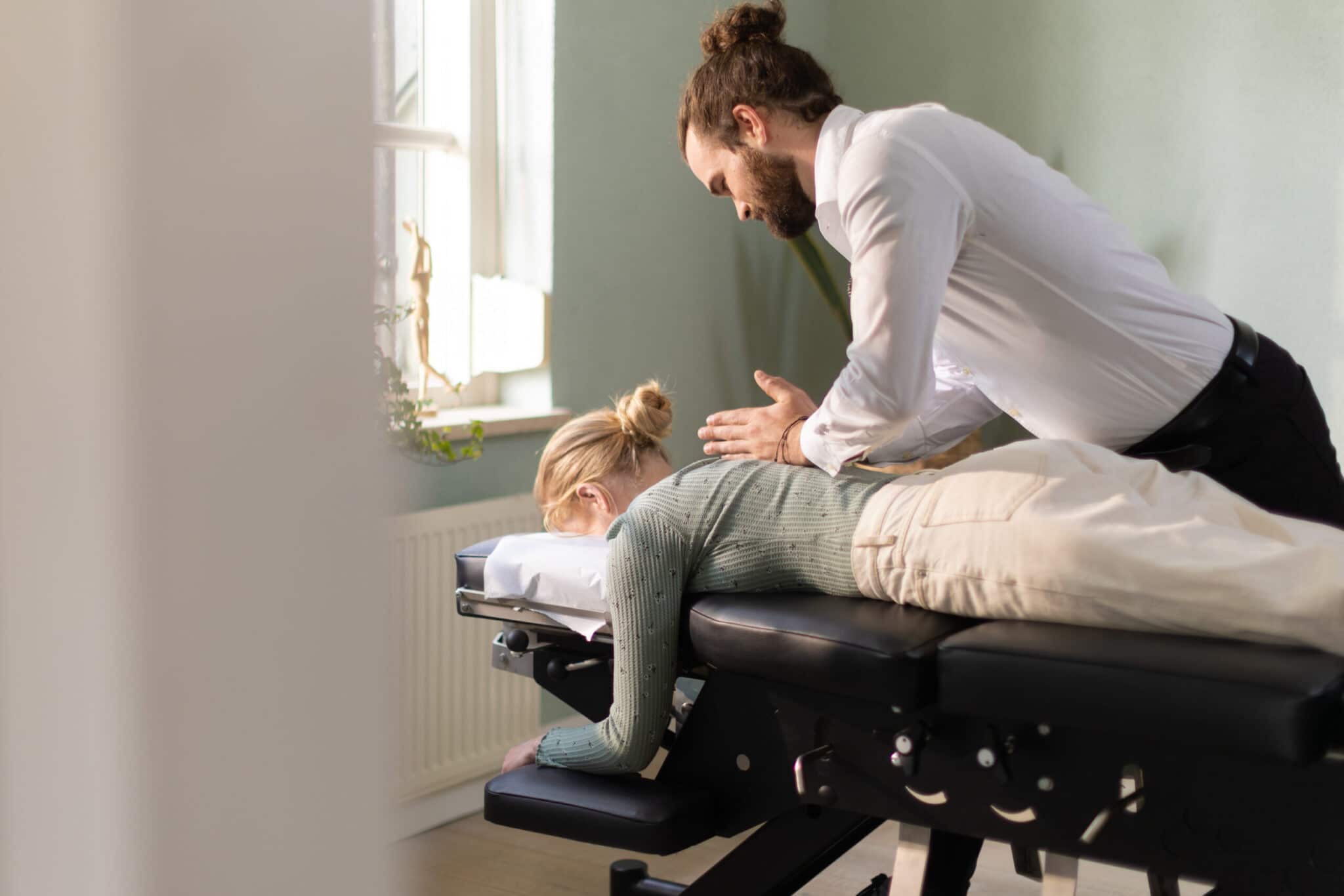
- Identify spinal segments that are restricted, especially in the upper neck, mid-back, and pelvis.
- Specific adjustments to restore motion and signal "safety" to the nervous system.
- Soft-tissue and breathing work to support the shift.
- Lifestyle conversation — sleep, screen time, exercise, recovery.
What patients describe
Patients with verified outcomes for "spinal blockages from stress and trauma" often report not just less pain, but feeling more themselves: calmer, sleeping better, breathing more deeply, and reacting less to everyday stressors.
The spine and nervous system are inseparable. Caring for one supports the other.